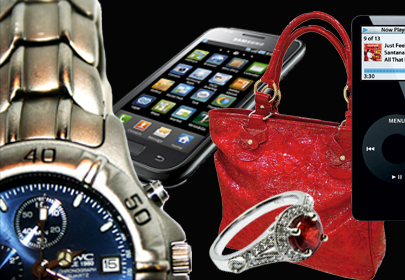
The term ‘hot products’ is used to describe the items most likely to be targeted by thieves. The home office uses the acronym C.R.A.V.E.D. to describe these objects – Concealable; Removable; Available; Valuable; Enjoyable and; Disposable. This phrase could easily describe the range of personal products identified earlier, and we have to acknowledge that for the added attraction of miniaturized objects we pay the price of increased vulnerability, as the designer Fiona Raby commented : “mobility – well, it’s messy (1).”
Most wanted personal products
In 2003, the most frequently stolen of ‘hot personal products’ was by far cash, with mobile phones coming second. Third on the list of most desirable products are credit cards. Purses and wallets are fourth on the list, and fifth on the list are personal accessories. Handbags and briefcases are a close runner-up in sixth position (2).
Keep your C.R.A.V.E.D. items safe while travelling
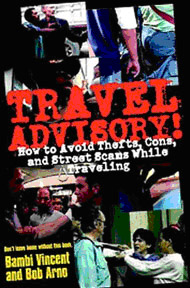
Bob and Bambi Arno’s book (Travel Advisory: How to Avoid Thefts, Cons, and Street Scams While Travelling 2004) says a lot about all stages of travel, from the point of view of crime prevention. The book is worth a look because despite the ‘Mom and Pop’ style warnings, it contains much needed visual material. For example, on Scippartori thieves – Italian slang for crooks who rob people of their belongings whilst riding a scooter or pedal bike – as well as, on how decoy ‘begging’ signs are manipulated by thieves as camouflage for deception theft…
The Halifax Survey says…
• Mobile phone thieves are costing the UK £390m each year
according to new figures issued by Halifax Home Insurance
• Incidents of the crime are happening so frequently that one mobile phone is stolen every twelve seconds in the UK
• There are currently over 37 million mobile phone owners in the UK and over two million mobile phones are stolen annually
• The most expensive phones were stolen in the Essex towns of Romford & Ilford where the average claim amounted to around £300
• An increase in high profile “phone-jacking” cases – where thieves are snatching phones right from their victims’ grasp as they walk down the street
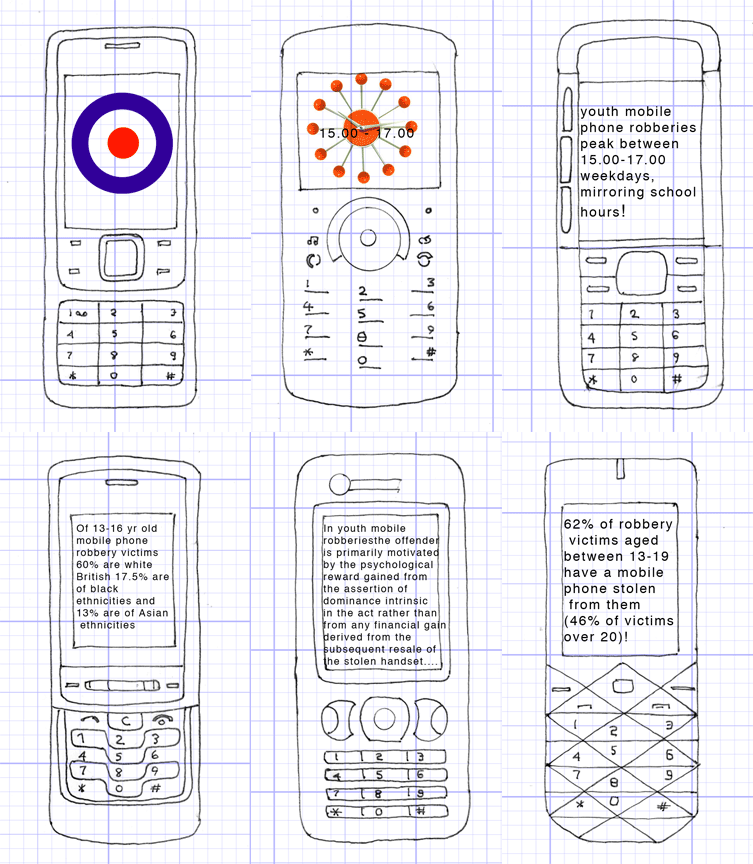
• Recently published Home Office research shows that children of school age are at least five times more likely to become victims of mobile phone theft, including robbery, than adults
• Mobile phones are now involved in 28% of all robberies compared to 8% three years ago
• The report also found that mobile phone theft is often a ‘Male on Male crime’
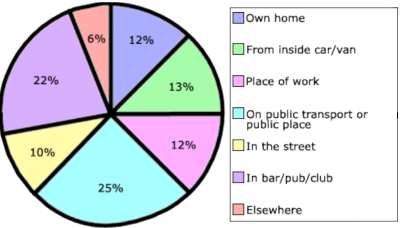
Where are mobile phones stolen from?
- Extract from a talk given by Fiona Raby, Research Fellow in Computer Related Design, Royal College of Art and Partner in Dunne and Raby, entitled Reflecting Change: New Awareness of the Potential of Business and Education Collaborations at the Design in Education Week 2000: Experiencing Design event. Design Council, London, 04.04.2000.
- Smith, J (2003) The nature of personal robbery [online]. Home Office Research Study 254. London: Home Office. Available from: http://www.homeoffice.gov.uk[Accessed 20th November 2007].
Design Council – Designing Out Crime:Hot Products
what_are_hot_products.pdf
Halifax Survey-Mobile phone theft costs UK £390 million a year